Educational overview only. Prudent Guardian (www.inspirecodingedu.com) is not an insurance company, broker, law firm, or registered investment adviser, and does not provide personalized insurance, investment, tax, medical, or legal advice. Verify details with licensed professionals and official issuers.
The seal is already open. You have not started the tally. The driver stands off to your left, holding their delivery manifest and scrolling through their phone like this is a routine occurrence. No weather damage is visible on the exterior of the trailer, and the lock assembly around the broken seal shows no signs of forced prying. You grab your pen and lean against the edge of the dock to pull up this document on your work device. You never assume the seal was broken by the carrier for a legitimate reason, even if the driver says they stopped to check the load at a weigh station 2 hours prior. You also do not accuse the driver of tampering, because you have no evidence of what happened to the seal before the trailer arrived at your dock; your only job right now is to record the facts as you observe them, before you open the door and see the cargo inside.
Log Both Listed and Observed Seal Serial Number Lines
You have two distinct seal number lines to record for every shipment that arrives with a pre-broken seal, no exceptions. The first line is the serial number printed on the carrier’s delivery paperwork, associated with the load when it departed its origin facility. The second line is the serial number printed directly on the broken seal you remove from the trailer’s door lock before you open the door. You never rely on verbal confirmation of either number, and you never fill in either line after you have started unloading the trailer, because delays introduce gaps in documentation that can be contested later. Illustrative example: The carrier’s manifest lists seal number XQK72941, while the broken seal you pull from the trailer lock has serial number XQK72914. You write both numbers clearly, with a 1-inch space between the two lines, so there is no confusion about which belongs to the paperwork and which belongs to the physical seal you hold in your hand. If the seal is broken into multiple pieces, you collect all fragments and place them in a small sealed evidence bag to attach to your physical copy of this document, to back up your recorded number line for the physical seal. You also ask the driver to initial next to both lines before you proceed, to confirm they were present when you recorded both numbers and agree the physical seal matches the number you wrote for the observed line. You can cross-reference the origin seal number with the pre-delivery alert logged in Dock Tally if you received a heads-up about the shipment 24 hours prior, but you always prioritize the number you read directly off the physical seal and the paperwork in front of you right now. You also take two clear photos of the broken seal, one close-up of the serial number and one of the seal attached to the trailer lock before you remove it, to add to your shipment records as additional confirmation of the state of the seal on arrival.
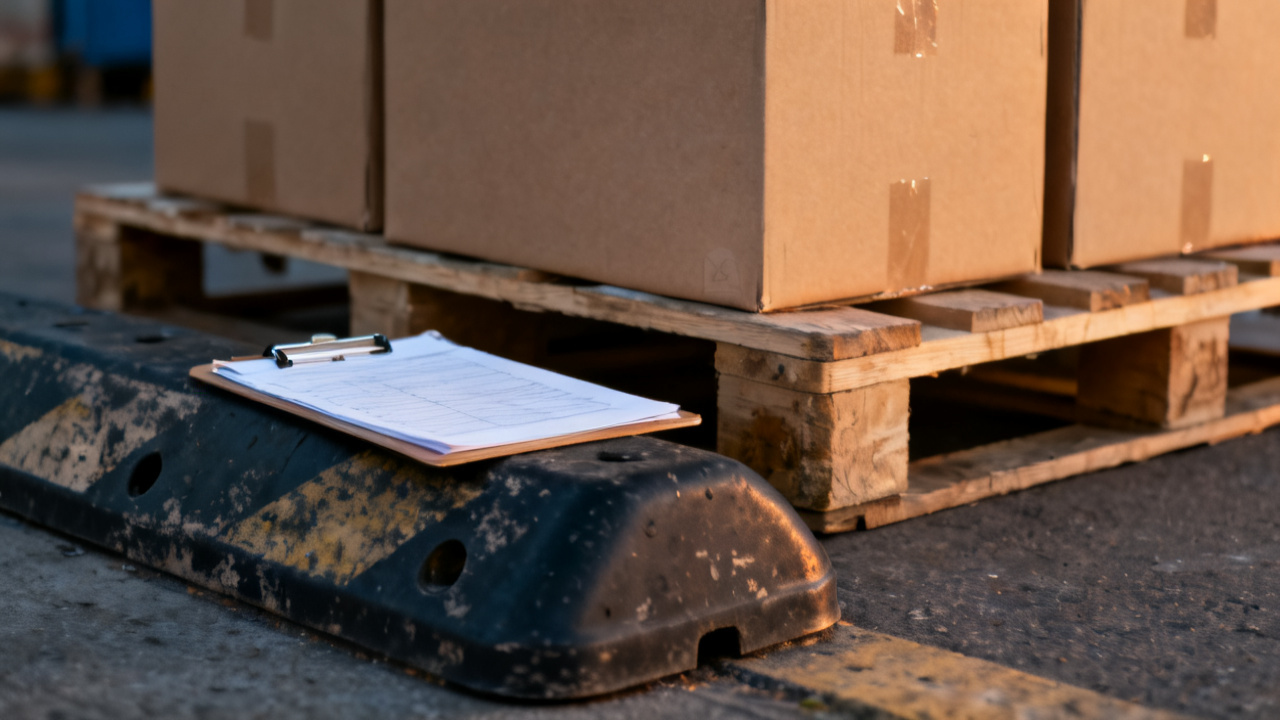
Flag Which Seal Number Line Controls for This Shipment
The controlling line is the number that will be tied to all subsequent tally entries, shortage or overage notes, and damage reports for this load, so you select it deliberately before you open the trailer door. Follow these four steps to flag the correct controlling line every time:
- Cross-check both recorded seal numbers against the origin seal confirmation sent by the shipper 48 hours prior to scheduled delivery, if you have access to that documentation.
- If the physical seal number matches the shipper’s confirmation, mark the physical seal line as the controlling line, even if it does not match the number printed on the carrier’s manifest.
- If the carrier’s manifest seal number matches the shipper’s confirmation and the physical seal number does not, mark the carrier’s manifest line as the controlling line, and add a 1-sentence note that the physical seal did not match the shipper’s confirmed number.
- If neither number matches the shipper’s confirmation, mark the physical seal line as the controlling line, and add a note that neither number aligned with the origin seal confirmation provided before delivery.
You draw a thick, solid line next to the controlling line, and write the word “CONTROL” in all caps above it, so anyone reviewing this document later can immediately identify which number is tied to the rest of the shipment records. You do not cross out the non-controlling line, because you need both lines to be fully visible for any future review. You also add a short note below the two lines explaining why you selected the controlling line, even if the reason is as simple as “matches shipper origin confirmation” to avoid ambiguity later. You ask the driver to initial next to your controlling line flag as well, to confirm they were present when you made the selection and had the opportunity to raise any objections to your call before you open the trailer door.
Save This Document to Your Shipment Attachment Folder
You never leave this document saved only to your personal device or a loose physical sheet in your dock station, because misplaced documentation creates unnecessary gaps in shipment records. If you are working with a digital copy, you rename the file to match the shipment’s pro number, and save it to the dedicated folder for this delivery, alongside the delivery manifest, tally sheet, and any photos you take of the broken seal and trailer exterior before opening the door. If you are working with a physical copy, you staple the sealed bag of seal fragments to the top left corner of the page, add the driver’s signature below your note about the controlling line, and place it in the designated inbound shipment tray for administrative teams to scan and file within 24 hours. You also take a clear photo of the entire page, including the seal fragments if you have them, and save that photo to your work device’s cloud folder as a backup, in case the physical copy is lost before it can be scanned. You do not alter any part of this document after you save it, even if you notice a typo later; if you need to correct a mistake, you add a dated addendum at the bottom of the page with your initials, explaining the correction and why it was needed. You also make sure the file is tagged with the delivery date, carrier name, and shipper name, so you can easily search for it later if you need to reference it for any shipment-related follow-up.
Reference This Entry When You Reconcile Shipment Discrepancies
The next time you open this document, you will be reviewing a reported mismatch between the number of units listed on the manifest and the number of units you counted during the tally, or a report of damaged goods that was not visible from the exterior of the trailer. You will use the two seal number lines and the flagged controlling line to confirm whether the seal on the trailer when it arrived at your dock matched the seal applied at origin, which helps narrow down where any discrepancy may have occurred during transit. You will not need to guess what seal was on the trailer or what number was listed on the manifest when the driver arrived, because you recorded both lines before you opened the door, before you had any information about the state of the cargo inside. You can share a copy of this document with the shipper, carrier, or your internal inventory team as needed, to provide clear, time-stamped evidence of the seal state when the shipment arrived at your dock. You do not add any additional notes to this document when you reference it later, unless you are adding a formal addendum with a date and your initials, to keep the original record of the seal state intact. You can also pull this document if you are asked to participate in a review of transit practices for a specific carrier or shipper, to provide factual data about how often pre-broken seals arrive with mismatched serial numbers, without adding any personal speculation about the cause of the broken seal.