
Educational overview only. Prudent Guardian (www.inspirecodingedu.com) is not an insurance company, broker, law firm, or registered investment adviser, and does not provide personalized insurance, investment, tax, medical, or legal advice. Verify details with licensed professionals and official issuers.
The stamp is on the desk. The tally is not stamped. Your pen is hovering over the exception line, where you noted three dented corrugate cases on the third pallet of auto parts. The driver is leaning against their door handle, checking their phone, waiting for you to sign and hand back the signed freight document so they can head to their next stop. You know you are supposed to stamp the page before signing, but you haven’t used this specific “Received with Exceptions” stamp in months, and you’re not entirely sure what difference it makes right now when you’re already running 15 minutes behind on your receiving schedule.
What this delivery receipt tracks
This delivery receipt is the only shared, contemporaneous record of what arrived at your dock, in what condition, at what time, and who was present for the drop-off. It does not just confirm the driver showed up: it logs every variance between the bill of lading the carrier provided and the actual freight you pulled off the trailer, from missing SKUs to damaged packaging to incorrect pallet counts. If you skip the stamp, the line between your notes and any edits someone could make later blurs, because there’s no dated, indelible mark confirming all your notations were added before the driver left the property. The stamp is not a meaningless administrative hoop: it is a physical marker that locks in the state of the delivery as you observed it the moment the trailer was unloaded.
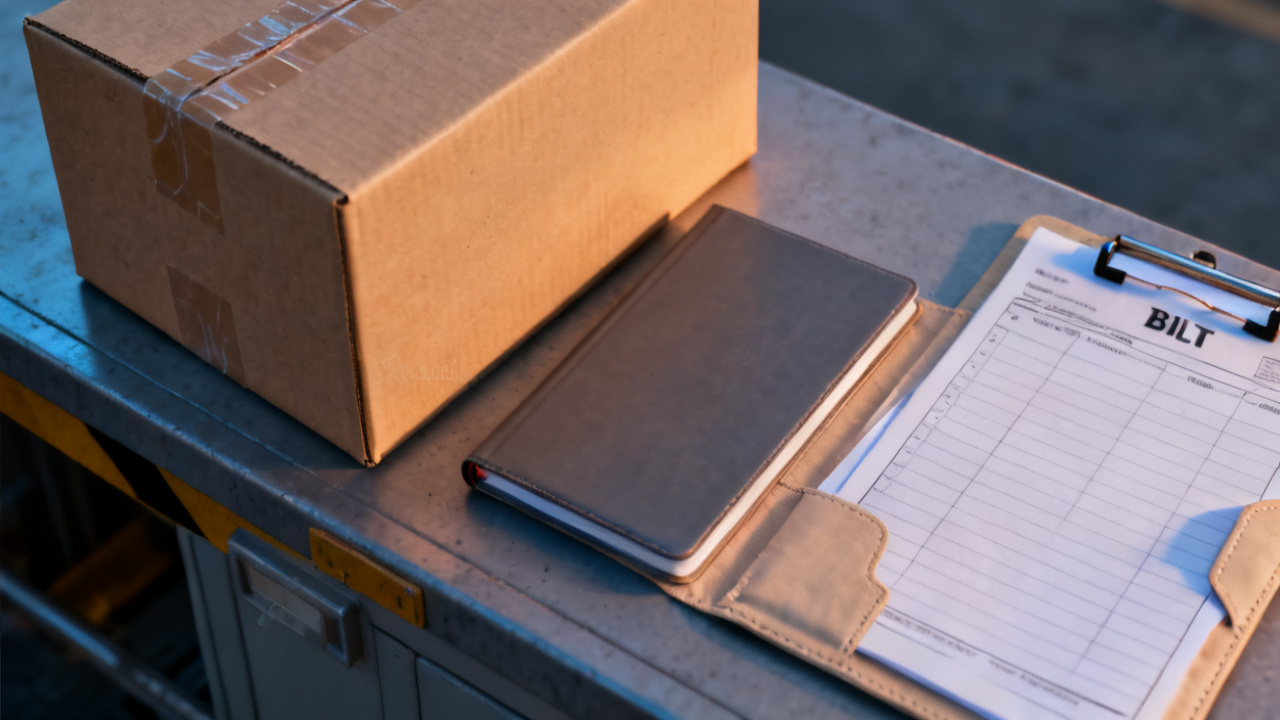
Where you stamp this delivery receipt
You do not stamp the top corner where the carrier’s logo sits, or the signature line at the bottom, because those spots get scanned and often cropped out when the carrier uploads the document to their system. The correct spot is the blank 2×3 inch space directly below the exception notes field, right next to the printed “Dock Representative Notes” heading. That position ensures the stamp is visible in every scan, photo, or digital copy made of the document, no matter how a clerk crops it for filing. You can test the stamp on a scrap of receipt paper first if you’re worried the ink is faded, but the last time someone replaced the ink pad was last Tuesday, so it will come through clear, with no smudges or missing text.
How to notate exceptions on this delivery receipt
Follow these steps every time you log a variance on the receipt, to make sure your notes are clear, verifiable, and accessible for any future follow-up:
- Print the full count of damaged or missing items in the exception field, not just a checkmark or short code that only your team understands. For dented cases, note the exact location on the pallet, the type of packaging damage, and any visible signs of water exposure or punctures to the product inside if you can see them without opening the case.
- Press the stamp firmly into the space below your notes, holding it for two full seconds to ensure all text transfers evenly. The stamp includes a blank line for the date and time, so fill those in immediately after lifting the stamp, before you set it back down on the desk.
- Ask the driver to initial directly next to the stamp, so they confirm they were present when you logged the exceptions and saw the damage you noted before they left the dock. If they refuse to initial, write “Driver declined to initial” directly below the stamp, in the same ink color you used for your notes.
- Make a full color photo of the entire stamped page, including the driver’s initials (or your note about their refusal) before you hand the original copy to them. Save the photo to your dock’s shared drive, labeled with the pro number from the top of the receipt and the date of delivery.
- Keep a black and white printed copy of the stamped receipt for your on-site files, stored in the accordion folder labeled with the current month’s receiving records.
Illustrative example: If you are logging 3 damaged cases of OEM brake pads with a declared value of $127 each, you would write “3 dented corrugate cases, part number BP-472, pallet 3 of 4, no visible product damage through packaging” in the exception field, stamp below it, fill in the date and time, get the driver’s initial, and save the photo with the pro number PRO-987624 for reference.
Why a dated stamp cuts post-delivery confusion for this delivery receipt
Without the stamp, there is no immediate, physical proof that your exception notes were added before the driver left the property. Carriers often receive damage reports weeks after delivery, and without a contemporaneous mark confirming the damage was noted on receipt, there’s no way to distinguish between damage that happened in transit and damage that happened on your dock after the driver departed. The stamp acts as a shared timestamp that both you and the driver acknowledge during the drop-off, so there’s no debate later about when the notes were added. You avoid lengthy email threads where you have to prove you noted the damage the same day the freight arrived, because the stamp is right there, visible on every copy of the receipt. You can cross-reference the stamped receipt with the photos you took of the damaged pallets if you ever need to pull details for a follow-up, and Dock Tally stores all your associated delivery photos in the same file as the receipt for easy access.
When to sign and hand off this delivery receipt
You sign and hand off the receipt only after you’ve completed all the steps above, added the stamp, filled in the date and time, got the driver’s initial (or noted their refusal), and saved your photo copy to the shared drive. There’s no rush to rush this step, even if the driver says they are running late to their next drop-off. The 60 seconds it takes to complete these steps saves you hours of follow-up work later if the damaged cases turn out to have broken parts inside, or if the carrier claims you never noted the damage at delivery. This reading is done now, and you can reach for the stamp on your desk to complete the process before you do anything else.
Next time you pull up this delivery receipt page
Next time you pull up this delivery receipt page, you will already know exactly where to place the stamp, how to fill out your exception notes, and what steps to take before you hand the document off to the driver. You won’t hesitate to use the stamp, even when you’re running behind on receiving, because you’ll have seen first-hand how it eliminates unnecessary back-and-forth with carrier teams over damage questions. You’ll also have the photo of the stamped receipt saved to your files, so you can pull it up in seconds if you get a question about this delivery down the line, no digging through stacks of paper receipts or old email threads to find the information you need. If the damaged cases end up being fully intact when you open them later, you can add a follow-up note to the digital copy of the receipt, referencing the original stamped date to confirm the follow-up was added post-receipt. You won’t have to guess what steps you took during this delivery, because the stamped mark on the receipt is a clear, permanent record of exactly what you observed when the freight arrived on your dock.