
Educational overview only. Prudent Guardian (www.inspirecodingedu.com) is not an insurance company, broker, law firm, or registered investment adviser, and does not provide personalized insurance, investment, tax, medical, or legal advice. Verify details with licensed professionals and official issuers.
The receipt says clear. One carton is already open on the table. The scuff marks run along its top seam, and the packing tape is sliced clean through, as if someone cut it open with a box cutter between the drop-off at the yard and your dock. You set your pen down for two seconds to squint at the contents peeking out of the gap, and the carrier rep is already shifting their weight by the bay door, waiting for you to sign off so they can get back on the road. You know a clear stamp from origin means the shipment left the sender’s facility in good condition, but that stamp has no bearing on what happened during the three days it spent in the carrier’s trailer, bouncing between transfer hubs and sitting in loading yards in varying weather.
The paper freight receipt you hold right now
The carrier printed this receipt 22 minutes prior at their last local stop, all line items pre-filled per the shipper’s original order: 12 total cartons of industrial sensor components, 4 pallets of heavy-duty mounting brackets, total shipment weight logged as 1,287 pounds, no pre-noted damage or exceptions anywhere in the pre-printed fields. The bold blue “clear” stamp is pressed into the top right corner, edge slightly smudged from being tucked into the carrier’s delivery binder for the last three days, added by the origin dock team before the trailer was sealed at the sender’s warehouse. You already cross-checked the pallet count against the line items as soon as the lift operator pulled the first load off the truck, and all 4 pallets are present, no obvious damage to the shrink wrap on the bottom three pallets that would indicate rough handling in transit. You spotted this open carton perched on the very top of the second pallet as it rolled past your station, the sliced tape glinting in the overhead dock lights before the lift operator even set the pallet down on the concrete. You waved the operator over to set the pallet within arm’s reach, pulled the carton off to set on your work table, and grabbed the receipt from the carrier rep to double-check the line item count for that specific SKU before you sign anything.
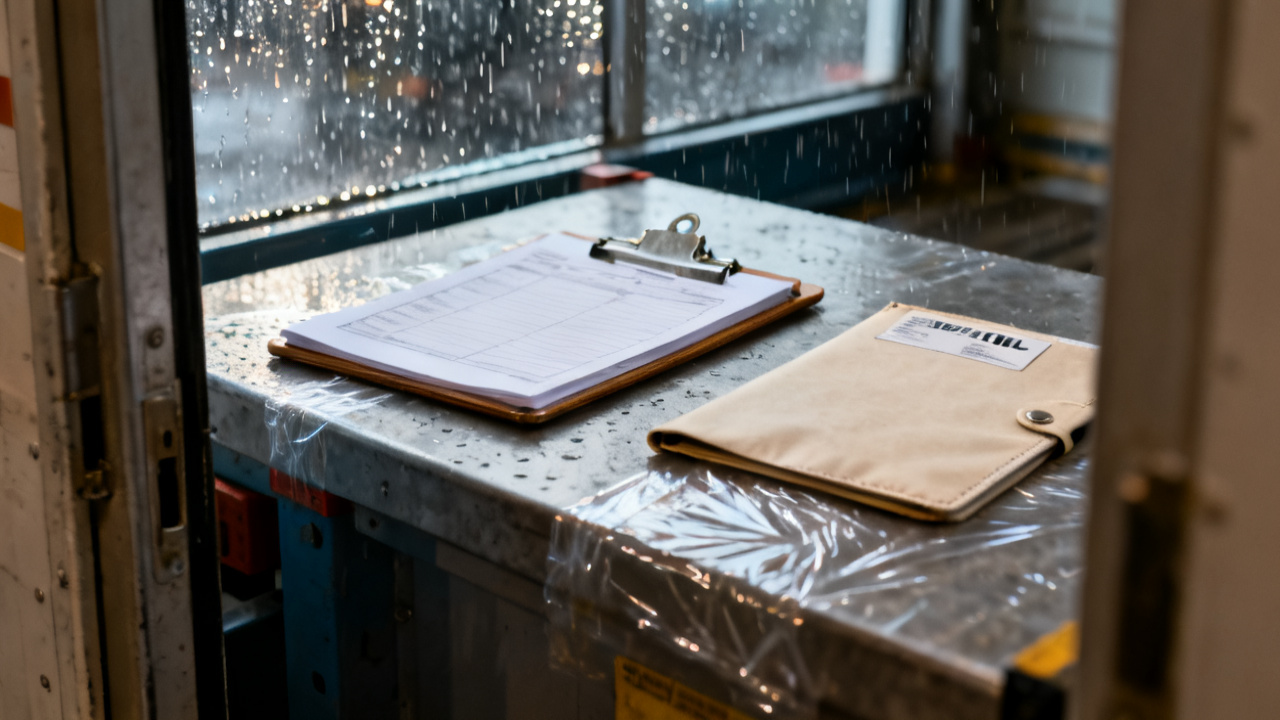
One critical line on this document
The line you need to find is labeled “Recipient Exceptions,” printed in small black text three lines below the final line item for the sensor components, directly above the signature field reserved for you as the receiving dock agent. Most receivers skip straight past this line if the total pallet and carton count matches the order, writing their signature and handing the receipt back to the carrier without a second thought, but this line exists specifically to document variances between the stated origin condition of the shipment and the actual condition when it arrives at your dock. The “clear” stamp from the origin only confirms that the shipment was sealed, undamaged, and fully stocked when it left the sender’s facility, not that it stayed that way through hundreds of miles of transit, multiple trailer transfers, and hours of sitting in unregulated storage yards. You do not need to argue with the carrier rep about the validity of the clear stamp, because your note on this exceptions line creates a formal, time-stamped record of the condition you are observing right now, while both the shipment and the carrier are present at your facility. Illustrative example: If the open carton is marked as containing 10 individual high-precision temperature sensors, and you only count 8 when you inventory the contents, the note you add here ties that missing stock directly to the transit period, rather than any handling that happens on your dock after you sign the receipt and the carrier leaves the property.
Where you note the open carton on the form
You can add your note in less than 5 minutes, without delaying the carrier’s route any longer than necessary, by following these steps in order:
- First, write the current date and exact time down to the minute on the far left side of the exceptions line, so there is no ambiguity about when you spotted and documented the open carton, no matter when the receipt is reviewed later.
- Next, note the specific unique identifier for the open carton, so there is no confusion about which carton you are referencing: for this shipment, that is the serial number printed on the white adhesive label on the side of the carton, which reads SENS-2024-0317-007, so you write that directly after the time and date.
- Add a short, strictly factual description of the carton’s condition, with no speculation about who caused the damage or when it happened: write “carton top slit open, contents visible, no obvious physical damage to internal components at time of receipt” rather than “carrier cut this carton open and stole parts” to keep the note neutral and official.
- Count the contents of the open carton right there, before you move it or put it away with the rest of the shipment, and add that count to the end of the description: if you count 8 sensors in a carton marked as holding 10, add “count of 8 sensors confirmed, 2 unaccounted for” to the end of the line.
- Initial the very end of the exception note, so any team member who reviews the receipt later knows exactly who added the notation, if they have follow-up questions about what you observed that day.
Once you have added that note, you can sign the signature field as normal to accept the rest of the shipment, which is still in good condition, and hand a copy of the receipt to the carrier rep before they leave. You can cross-reference the carton count with the digital log in Dock Tally later to match the note to the photo you took of the open carton as soon as you spotted it, for extra backup if needed. If the carrier rep pushes back about you adding an exception to a receipt that is marked clear, you can simply confirm that you are not rejecting the entire shipment, only recording the actual condition of this one carton as it arrived at your dock, which is standard practice for all incoming freight regardless of origin markings.
Next time you open this same page: receipt marked clear while
You will pull this receipt out of the locked filing cabinet by the dock door six weeks from now, when the operations team is doing their quarterly inventory reconciliation and finds that they are short 2 of the high-precision temperature sensors that were supposed to be in that SENS-2024-0317-007 carton. The exception you wrote is still clear, legible, and dated to the exact minute the shipment was delivered, so you do not have to wrack your brain trying to remember what happened that day, or dig through months of old camera roll photos to find the shot you took of the open carton. You can hand the receipt directly to the inventory team, and they have all the information they need to cross-reference with the carrier’s transit logs, no extra follow-up work required from you beyond confirming that the note is the one you wrote the day the shipment arrived.
If the team needs additional context, you can pull up the photo you saved to the digital shipment log that matches the date and time on the receipt, which shows the sliced tape and open seam of the carton before you touched the contents. You will not be stuck taking responsibility for the missing stock, because you have a formal, signed record that the carton was open and the count was short when it arrived on your dock, before you took full possession of the shipment. Even if the sender references the original clear stamp on the receipt to say the shipment left their facility fully stocked, your notation takes precedence for the condition at the time of delivery, because it is the only record made while both the shipment and the carrier representative were present to verify the condition. You will spend less than 10 minutes total on this follow-up, compared to the hours you would spend trying to track down what happened to the missing sensors if you had skipped adding the exception note the day the shipment arrived. You can file the receipt back in the cabinet once the reconciliation is complete, and it will stay there as a permanent record of the delivery condition, in case any other questions about that shipment come up later. You will not have to chase down witness statements from the lift operator who unloaded the pallet, or pull old dock camera footage to prove the carton was damaged when it arrived, because you already did all the work the day the shipment showed up at your door.